
The AI boom has a landlord problem
The AI revolution is turning American small businesses into tenants. They rent intelligence by the month, at prices they don't control, from a handful of companies that own the rails. Stop paying, and everything you built on those tools disappears.
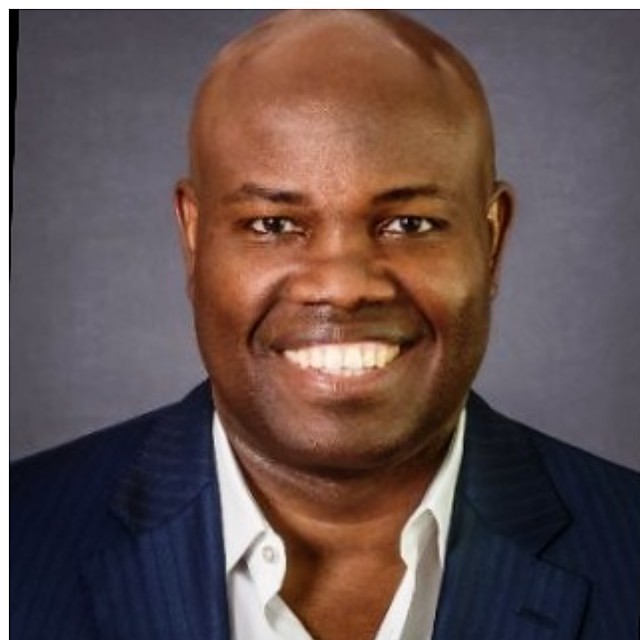
I know what ownership looks like because I spent 25 years building technology systems for Honeywell, Invensys, and Schneider Electric across 15 countries. I came to the United States from Haiti, and in 2019 I founded TechFides in Frisco, Texas, on a simple conviction. The medical offices, law firms, auto dealers, and trades contractors that keep this country running deserve the same grade of technology the Fortune 500 takes for granted, and they deserve to own it.
The leak nobody sees
Every time an employee pastes a contract, a client list, a patient note, or a pricing sheet into a cloud AI tool, that information leaves the building. It flows to servers the business doesn't control, under terms most owners have never read, where it can be stored, reviewed, and in some cases used to train someone else's model.
That is intellectual property walking out the door. The processes, formulas, and client knowledge that took an owner twenty years to build, leaking one prompt at a time, invisibly, every day.
A small medical practice showed me its AI stack earlier this year. $1,200 a month for a chat tool. $2,400 a month for an AI scribe. Three more subscriptions behind those. Over $4,200 a month, rented, never owned, with patient data leaving the building on every query. Their compliance officer wasn't sleeping. He was right not to.
Your IP took twenty years to build. It leaks one prompt at a time.
What owning your AI changes
Private AI reverses the arrangement. We deploy AI on hardware the client owns, configured for their operations. The model runs inside their walls. No cloud dependency, no recurring API bills, and the data never leaves the building.
Three things change the day a business owns its intelligence.
Protection. The law firm protects privilege. The medical office protects patients. The manufacturer protects its designs. Trade secrets stay secret because they never travel.
Cost. Rented AI is a bill that climbs every quarter and never ends. Owned AI is bought once and works for years, like the building itself.
Equity. This is the benefit nobody talks about. Rented AI is an expense that vanishes the day you stop paying. Owned AI is an asset: your systems, your trained workflows, your protected data, running on your hardware. The day an owner decides to sell, a business that owns its intelligence commands a different multiple than one renting it month to month. We are helping owners build equity, not subscriptions.
These systems are running in Texas small businesses today. The demand we see is national.
Look at how our competitors do it
When a small Chinese company decides to compete overseas, it does not go alone. It walks into the target market on top of an infrastructure built to help it capitalize: state backed financing, export credit, trade promotion, technology access. That is a deliberate national strategy, executed through small firms, and it works. Their small businesses arrive in a new market with a system behind them.
An American small business making the same move largely goes it alone. The skills are here. The technology is here. The drive is here. I have watched it in fifteen countries, and nothing anywhere outworks the American small business owner. What is missing is not talent. It is the infrastructure behind the talent.
And the stakes are bigger than any one company. Private AI keeps American business data in American buildings, on American owned hardware. Every small firm we equip is a door closed to data leaving this country.

Not a handout. A defined investment process.
American small business is not asking to be carried. We are asking for an investment process that matches what we already bring, with clear criteria, real access, and accountability on both sides. Three places to start.
- Federal AI procurement set-asides. Federal AI contracts flow overwhelmingly to the largest vendors. Meaningful small business set-asides in AI procurement would do what procurement policy has always done best: give capable small firms a first customer and a track record.
- Expanded SBIR funding for applied AI. The research programs exist. Point them at the companies putting AI to work on Main Street. Deployment, not just invention.
- Compute access for small AI firms. The scarcest input in this industry is compute, and today small firms rent it from the same giants they compete against. A national compute access program for qualified small businesses levels the single most tilted part of the field.
Competitiveness runs through Main Street
Each of these is a defined process with a measurable return: more competitors in the market, more American IP protected, more Main Street businesses with technology they own.
I walked into a library for the first time at eighteen. I know exactly what access to the right tools at the right moment does for a person, because it happened to me, and I have spent my career building so it can happen for others. Small business owners don't need to be convinced of the future. They are already working in it, every day, with whatever tools they can afford.
China figured out that national competitiveness runs through its small businesses. America invented that idea. It's time we funded it again.
Get the next piece first.
One email when I publish. Field notes on AI, Africa, Haiti, and running a business across borders. No spam, and you can leave anytime.
Your email is only used to send new writing. Reply to any email to unsubscribe.